Custom Commercial Inflatables China: Your Complete Guide for Rental Success
If you’re running a bounce house rental business, you’ve probably wondered how to get unique inflatables that stand out from your competition. Moreover, you want to save money while getting top-quality products. The good news is that Chinese manufacturers offer custom commercial inflatables that can help you achieve both goals. In fact, many successful rental businesses save 20-50% on costs by working directly with Chinese factories.
💡 Quick Takeaway
Average Cost Savings: 20-50% compared to Western manufacturers
Typical Lead Time: 1.5-3 months (production + shipping)
Price Range: $650-$3,800 per custom unit
Best For: Rental businesses wanting unique designs and better profit margins
Quick Facts: What You Need to Know About Custom Inflatables from China
Before diving deep into the details, let’s look at the most important facts about sourcing custom commercial inflatables from China. Additionally, these quick insights will help you decide if this option makes sense for your rental business.
Key Benefits at a Glance
| Benefit | Details |
|---|---|
| Cost Savings | Save 20-50% compared to buying from US or European suppliers |
| Customization | Create unique designs with your branding and custom colors |
| Quality Options | Choose from manufacturers with ASTM, CE, and UL certifications |
| Large Selection | Access to 500+ design templates and endless custom possibilities |
| Warranties | Top manufacturers offer 2-3 year quality guarantees |
Important Numbers to Remember
The global inflatable toys market is growing at a steady pace of 6.55% each year. Furthermore, China’s inflatable market alone is worth approximately $91.80 million in 2025. This growth means more competition among manufacturers, which translates to better prices and quality for you.
When you’re planning your budget, keep these numbers in mind. First, expect to spend between $650 and $3,800 per custom inflatable unit. Second, plan for a total timeline of 1.5 to 3 months from order to delivery. Finally, remember that bulk orders typically reduce your per-unit cost by another 10-20%.
What Makes Chinese Manufacturing Special
China dominates the global inflatable production industry for several good reasons. To begin with, they have specialized manufacturing zones where hundreds of inflatable factories are located. These factories share resources, knowledge, and innovations, which keeps quality high and costs low.
Additionally, Chinese manufacturers have perfected the art of customization. They use advanced 3D modeling software to turn your ideas into reality. As a result, you can create inflatables that perfectly match your brand and target market. Whether you want a superhero-themed combo unit or a elegant white bounce house for weddings, Chinese factories can make it happen.
Why Rental Businesses Choose Custom Bounce Houses from China
Smart rental business owners always look for ways to maximize profits while delivering amazing experiences to their customers. Therefore, understanding why so many successful companies source from China can help you make the right decision for your business.
Massive Cost Savings That Boost Your Bottom Line
Let’s talk about money first because it matters most to your business success. When you buy custom commercial inflatables from China, you typically save between 20% and 50% compared to Western manufacturers. For example, a custom bounce house combo that costs $3,000 from a US supplier might only cost $1,500 to $2,100 from a Chinese manufacturer.
These savings add up quickly as you grow your inventory. If you’re buying 10 inflatables for your rental fleet, you could save $7,500 to $15,000. That’s enough money to buy several more units or invest in marketing to grow your business faster.
However, it’s important to remember that the lowest price isn’t always the best deal. Instead, focus on finding manufacturers who offer the best combination of quality, service, and price. Reputable manufacturers provide better long-term value because their products last longer and require fewer repairs.
Customization That Sets You Apart
In the competitive rental business, standing out from the crowd is crucial for success. Consequently, having unique inflatables that your competitors don’t have gives you a major advantage. Chinese manufacturers excel at creating custom designs that match your exact specifications.
You can customize almost everything about your inflatables. First, you can add your company logo and branding colors throughout the design. Second, you can create themed inflatables that appeal to specific customer groups. For instance, you might design a cowboy-themed bouncer for country-themed parties or a mermaid combo unit for beach parties.
Moreover, customization helps you charge premium prices. When customers see unique, eye-catching inflatables that they can’t find anywhere else, they’re often willing to pay 15-25% more for their rental. This means your custom inflatables not only cost less to buy but also earn more money per rental.
Access to Industry Innovation and Trends
Chinese manufacturers are constantly innovating and creating new designs. Because they work with rental businesses worldwide, they understand what’s popular in different markets. As a result, you get access to the latest trends and designs before your local competitors discover them.
The inflatable industry is experiencing steady growth, with a 6.55% annual increase in market size. This growth drives innovation in design, materials, and safety features. Chinese manufacturers invest heavily in research and development to stay competitive, which means you benefit from their improvements.
Additionally, many Chinese factories specialize in creating custom themed inflatables for special events. This specialization means they have experienced designers who can bring your creative ideas to life. Whether you need inflatables for corporate events, school festivals, or private parties, they have the expertise to create perfect solutions.
Scalability for Growing Businesses
When your rental business starts growing, you need to expand your inventory quickly. Chinese manufacturers can handle large orders efficiently, which helps you scale up without delays. Furthermore, they offer flexible ordering options that work for businesses of all sizes.
Starting with a small order to test the quality makes sense for new businesses. Then, as you verify the quality and your business grows, you can place larger orders to get even better pricing. Many manufacturers offer tiered pricing, where larger orders receive bigger discounts.
How Much Do Custom Commercial Inflatables from China Actually Cost?
Understanding the true cost of custom commercial inflatables helps you budget properly and avoid surprises. Therefore, let’s break down every expense you’ll encounter when importing from China.
Base Unit Pricing
The starting price for your custom inflatable depends on several factors. Generally speaking, basic bounce houses start around $300 to $600 for simple 13×13 foot designs. Meanwhile, larger combo units with slides can range from $800 to $1,500.
Size significantly impacts the price because larger inflatables require more materials and labor. For example, a standard 15-foot bounce house uses approximately 150-200 square feet of commercial-grade vinyl. In contrast, a 30-foot obstacle course might use 500-700 square feet of material.
Material quality also affects the base price. Commercial-grade 18 oz vinyl costs more than standard 15 oz vinyl, but it lasts much longer. Therefore, spending an extra $100-$200 upfront for better materials saves you money in the long run because your inflatable will withstand more uses before needing repairs.
| Inflatable Type | Size Range | Base Price |
|---|---|---|
| Standard Bounce House | 13×13 to 15×15 feet | $300-$600 |
| Bounce House Combo | 15×15 to 20×15 feet | $800-$1,500 |
| Water Slide | 18-25 feet tall | $1,200-$2,500 |
| Obstacle Course | 30-50 feet long | $1,500-$3,500 |
| Interactive Games | Various sizes | $600-$2,000 |
Customization Costs
Adding custom features to your inflatable increases the price, but these additions make your product unique. First, adding your company logo typically costs an extra $50 to $150, depending on the size and placement. Second, custom color schemes beyond standard options might add $100 to $200 to the total cost.
Complex custom designs with detailed artwork or characters cost more because they require more skilled labor. For instance, creating a detailed circus-themed combo with multiple characters and intricate details might add $300 to $500 to the base price. However, these unique designs often justify higher rental rates, which helps you recover the extra investment quickly.
Additionally, special features like LED lights, digital printing, or 3D elements increase customization costs. Nevertheless, these premium features can make your inflatables stand out at events, especially for evening parties or indoor venues. Many rental businesses find that premium features increase their booking rates by 20-30%.
Required Accessories and Equipment
Your inflatable needs proper equipment to function safely and efficiently. Most importantly, you need a commercial-grade blower that meets safety standards. Quality blowers with CE or UL certification typically cost between $100 and $300.
Don’t forget about essential accessories that come with professional setups. These include stakes or sandbags for anchoring ($50-$100), repair kits ($30-$50), and storage bags ($40-$80). While these items seem like small expenses individually, they add up to approximately $220-$530 per inflatable unit.
Furthermore, consider investing in safety equipment like ground tarps and safety mats. These items protect your inflatable from damage and reduce liability risks. Many safety experts recommend budgeting an additional $100-$200 for comprehensive safety equipment per unit.
Shipping and Import Expenses
Shipping costs vary significantly based on your location and the shipping method you choose. Ocean freight is the most economical option for larger orders, typically costing $200 to $600 per inflatable. However, ocean shipping takes 20-40 days, so you need to plan ahead.
Air freight is faster but more expensive, usually costing 3-5 times more than ocean freight. Therefore, most rental businesses use air freight only for urgent orders or small items. For regular inventory building, ocean freight makes more financial sense.
Import duties and customs fees add another layer of costs. In the United States, import tariffs on inflatables typically range from 10% to 25% of the product value. Additionally, you might need to pay customs brokerage fees ($100-$300) and port handling charges ($50-$150). These fees vary by country, so check with a customs broker in your area for accurate estimates.
| Cost Component | Estimated Range | Key Factors |
|---|---|---|
| Base Inflatable Unit | $300-$1,500 | Size, type, basic features |
| Custom Design Add-ons | $50-$500 | Logo placement, colors, artwork complexity |
| Blower & Accessories | $220-$530 | Blower quality, safety equipment, repair kits |
| Ocean Shipping | $200-$600 | Distance, volume, shipping season |
| Import Duties & Fees | $150-$500 | Country regulations, product value, tariff rates |
| Total Per Unit | $920-$3,630 | All factors combined |
Hidden Costs to Consider
Some expenses aren’t immediately obvious when you first start importing. For example, payment processing fees for international transactions typically cost 2-4% of the order value. If you’re ordering $10,000 worth of inflatables, that’s an extra $200-$400 in fees.
Quality inspection services provide peace of mind but add to your costs. Hiring a third-party inspector in China to check your order before shipping costs approximately $200-$400 per inspection. However, this investment can save you thousands by catching quality issues before products leave the factory.
Storage costs matter too, especially if you’re ordering large quantities. You’ll need secure, climate-controlled space to store your inflatables when they’re not in use. Many rental businesses spend $100-$500 monthly on storage facilities, depending on their location and inventory size.
Smart Ways to Reduce Your Total Costs
Now that you understand all the costs involved, let’s look at strategies to minimize your expenses. First and foremost, ordering in bulk reduces your per-unit cost significantly. Manufacturers typically offer 10-20% discounts for orders of 5 or more units.
Secondly, grouping your orders with other rental businesses in your area helps split shipping costs. This strategy, called consolidated shipping, can reduce your shipping expenses by 30-50%. Furthermore, working with experienced inflatable suppliers who handle logistics efficiently prevents costly mistakes and delays.
Planning your orders during off-peak seasons also saves money. Shipping costs typically drop during slower periods (November through February), and manufacturers often offer promotional pricing to keep their factories busy. Therefore, ordering your inventory for the upcoming busy season during winter months makes financial sense.
Top Chinese Manufacturers for Commercial Bounce Houses (2025)
Choosing the right manufacturer is the most important decision you’ll make when sourcing custom commercial inflatables from China. Therefore, you need to understand what separates excellent manufacturers from mediocre ones. Let’s explore the top options available in 2025.
What Makes a Great Inflatable Manufacturer
Before we look at specific companies, let’s discuss the qualities that define exceptional manufacturers. First, they must have proper safety certifications like ASTM F2374, EN14960, or CE marking. These certifications prove that their products meet international safety standards.
Second, great manufacturers offer generous warranties that protect your investment. A warranty of 2-3 years shows confidence in their product quality. Additionally, responsive customer service makes a huge difference when you have questions or need support.
Experience matters significantly in the inflatable industry. Manufacturers with 10+ years of experience understand what rental businesses need. Furthermore, they’ve refined their production processes to minimize defects and maximize durability. Companies like Bounce Horizon, with over 20 years in the business, bring valuable expertise to every project.
Bounce Horizon: Premium Quality for Serious Rental Businesses
Bounce Horizon stands out as a premier choice for rental businesses that prioritize quality and reliability. With over 500 inflatable product models available, they offer extensive options for customization. Their products are crafted from durable 18 oz vinyl, which is thicker and stronger than the industry standard.
What truly sets Bounce Horizon apart is their commitment to excellence. Every inflatable is handcrafted by experienced artisans who pay attention to every detail. Moreover, they use advanced machinery for precision cutting and double stitching, which adds extra strength to all seams.
The company provides an impressive 3-year quality guarantee, which is longer than most competitors offer. This extended warranty demonstrates their confidence in product durability. Additionally, their standard production time ranges from 6 to 15 days, which is faster than many other manufacturers.
Bounce Horizon specializes in creating bounce house combos that combine jumping areas with slides and other features. They also excel at producing commercial water slides that withstand heavy use in rental settings. Their customization capabilities allow you to integrate your branding seamlessly into any design.
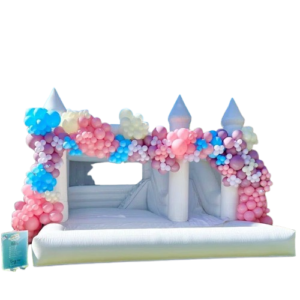
Elegant white bounce house combo perfect for upscale events
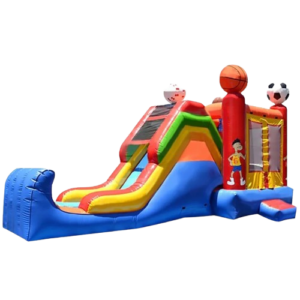
Action-packed sports combo for active kids
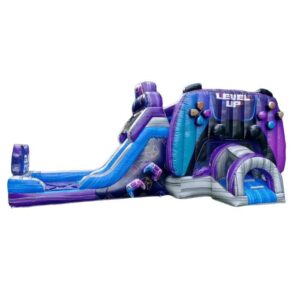
Modern gamer-themed design that attracts tech-savvy customers
Other Notable Chinese Manufacturers
While Bounce Horizon leads the industry, several other manufacturers deserve consideration. Channal Inflatables specializes in giant custom projects and offers certifications from UL, CE, GS, BS, and SAA. Their price range of $350-$1,200 makes them accessible for businesses with tighter budgets.
KUOYE Inflatables serves customers in over 80 countries and provides excellent OEM/ODM services. They’re particularly strong in creating dry slides and combination units. Their certifications include EN14960 and ASTM standards, ensuring international safety compliance.
Yoyo Inflatable offers budget-friendly options with quick production times. While their warranty period is shorter (1-2 years), they excel at delivering standard designs rapidly. This makes them suitable for businesses that need inventory quickly and prioritize cost over customization.
| Manufacturer | Price Range | Warranty | Best For |
|---|---|---|---|
| Bounce Horizon | $400-$1,500 | 3 Years | Premium custom designs for serious rental businesses |
| Channal Inflatables | $350-$1,200 | 2 Years | Large-scale commercial projects |
| KUOYE Inflatables | $300-$1,100 | 2 Years | Wide variety including OEM/ODM services |
| Yoyo Inflatable | $280-$950 | 1-2 Years | Budget-conscious buyers needing quick delivery |
How to Evaluate Manufacturers
When comparing manufacturers, start by requesting samples of their work. Physical samples reveal the actual quality better than photos or descriptions. Pay attention to stitching quality, material thickness, and overall craftsmanship.
Next, check their certifications carefully. Don’t just take their word for it—ask for copies of certification documents. Legitimate manufacturers willingly provide proof of their ASTM, CE, or UL certifications. Furthermore, verify these certifications through the issuing organizations if possible.
Communication quality matters tremendously throughout your business relationship. Test their responsiveness by asking detailed questions during your initial inquiries. Manufacturers who respond quickly and thoroughly to pre-sale questions typically provide better post-sale support too.
Reading reviews and testimonials from other rental businesses helps you avoid problems. Look for detailed manufacturer reviews that discuss long-term durability, customer service experiences, and warranty claim handling. Real experiences from other buyers provide valuable insights.
The Custom Design Process: From Idea to Finished Product
Understanding how the customization process works helps you plan effectively and set realistic expectations. Additionally, knowing each step lets you contribute ideas at the right times to get exactly what you want.
Step 1: Initial Consultation and Concept Development
The process begins when you contact a manufacturer with your ideas. During this initial consultation, you’ll discuss your vision, budget, and timeline. Be as specific as possible about what you want—colors, themes, sizes, and special features.
Many manufacturers offer free design consultation services to help you refine your ideas. Their experienced designers can suggest improvements based on what works well in the rental market. For example, they might recommend adding mesh windows for better visibility or suggesting color combinations that photograph well for marketing.
At this stage, you’ll also discuss practical considerations like weight capacity, age groups, and intended use. If you’re creating a custom obstacle course, the designer needs to know whether it’s for children, adults, or both. This information affects the size, layout, and safety features.
The initial concept development typically takes 1-3 days. Quick decision-making on your part speeds up this phase. Therefore, prepare your requirements and preferences before your first meeting with the manufacturer.
Step 2: Design Approval and Technical Specifications
Once you’ve discussed your concept, the manufacturer creates detailed design drawings or 3D renderings. These visual representations show exactly how your finished product will look. Review these designs carefully because changes become more expensive after production starts.
During the design approval phase, you’ll receive technical specifications including exact dimensions, material types, and construction details. Pay special attention to safety features like proper anchoring points, emergency exits, and weight distribution. These technical elements ensure your inflatable meets safety standards.
Don’t rush this approval stage even though you’re excited to move forward. Take time to imagine how customers will use the inflatable at actual events. Consider factors like setup time, transportation requirements, and storage space. Making changes now prevents costly mistakes later.
Communication is crucial during design approval. Ask questions about anything unclear in the drawings or specifications. Professional manufacturers like Bounce Horizon welcome questions because they want you to be completely satisfied with the final product.
Step 3: Material Selection and Quality Standards
After approving the design, you’ll confirm material choices for your custom inflatable. The most common options are PVC tarpaulin (also called PVC coated fabric) in different weights. Commercial-grade inflatables typically use 0.55mm (18 oz) PVC, which balances durability with weight.
Higher-quality materials cost more but last significantly longer. For instance, 18 oz vinyl might cost 15-20% more than 15 oz vinyl, but it can last 2-3 years longer with proper care. Therefore, investing in better materials makes sense for rental businesses planning long-term operations.
Thread quality matters as much as material quality. Double stitching with reinforced thread at stress points prevents tears and extends product life. Additionally, proper heat sealing techniques ensure air-tight seams that maintain proper inflation.
Ask about the UV resistance and fire retardancy of materials. Quality manufacturers use materials that resist fading from sun exposure and meet fire safety standards. These features protect your investment and ensure compliance with local regulations.
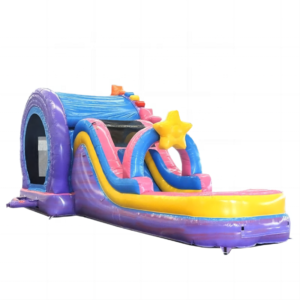
Creative ferris wheel design shows customization possibilities
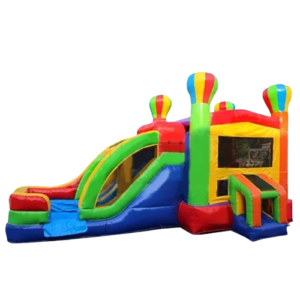
Detailed circus theme with vibrant colors and characters
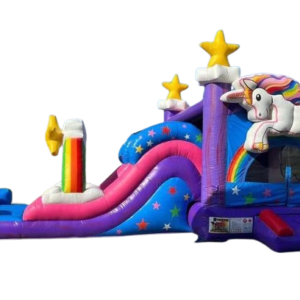
Popular unicorn theme appeals to young children
Step 4: Production and Quality Control
Production typically takes 15-30 days depending on design complexity and factory workload. During this time, skilled workers cut materials, stitch panels together, and add custom graphics. Quality manufacturers follow strict production schedules to meet agreed-upon deadlines.
Throughout production, quality control inspections happen at multiple stages. First, workers check raw materials for defects. Then, they inspect stitching and assembly work. Finally, they conduct inflation tests to ensure proper air retention and structural integrity.
Some buyers hire third-party inspection companies to verify quality before shipping. These independent inspectors visit the factory, examine the finished product, and provide detailed reports. While this service costs $200-$400, it provides peace of mind for large orders.
During production, stay in contact with your manufacturer for updates. Reputable companies provide progress photos or videos showing your inflatable at different production stages. This transparency builds confidence and allows you to catch any issues early.
Step 5: Final Testing and Packaging
Before shipping, manufacturers conduct comprehensive final testing. They fully inflate the unit and check for air leaks, verify all seams hold pressure, and test safety features. Additionally, they confirm that colors match approved designs and graphics are properly applied.
Proper packaging protects your investment during shipping. Quality manufacturers use heavy-duty cartons with moisture barriers and protective padding. They also include all accessories, instruction manuals, and warranty documents in the package.
Request photos of the packed products before shipping. This documentation proves the condition of items when they left the factory, which helps resolve any shipping damage claims. Furthermore, these photos verify that you’re receiving exactly what you ordered.
Timeline Expectations for Custom Orders
Understanding realistic timelines prevents disappointment and helps you plan inventory additions strategically. From initial contact to receiving your product typically takes 1.5 to 3 months total. Here’s a realistic breakdown of the timeline.
Design and approval phase: 3-7 days. Production time: 15-30 days. Quality testing and packaging: 2-3 days. Ocean shipping: 20-40 days. Customs clearance: 3-7 days. Therefore, plan your orders at least 3 months before you need the inflatables for peak season.
Rush production is sometimes available for extra fees, typically 15-30% above standard pricing. However, rushed production can compromise quality because workers have less time for careful craftsmanship. Therefore, avoid rush orders whenever possible by planning ahead.
Safety First: Quality Standards and Certifications Explained
Safety should always be your top priority when choosing custom commercial inflatables from China. Fortunately, understanding the key certifications and quality standards helps you make informed decisions that protect both your customers and your business.
Understanding International Safety Standards
Different countries have different safety standards for commercial inflatables. In the United States, ASTM F2374 is the primary standard that covers inflatable amusement devices. This standard specifies requirements for design, manufacture, installation, operation, maintenance, and inspection.
European countries follow EN14960, which provides similar safety guidelines tailored to European regulations. Meanwhile, Australia uses AS3533 for inflatable amusement devices. Quality Chinese manufacturers obtain certifications for multiple standards to serve international markets.
These standards cover crucial safety aspects including material strength, anchoring requirements, emergency exits, and proper labeling. Furthermore, they specify testing procedures that manufacturers must follow. When a manufacturer claims certification, they’re stating that their products have passed rigorous testing by accredited laboratories.
Don’t accept vague claims about safety compliance. Instead, ask manufacturers for specific certification numbers and issuing laboratory names. You can verify legitimate certifications by contacting the testing laboratories directly. This extra step protects you from fraudulent claims.
Material Quality and Durability Standards
The quality of materials directly affects both safety and longevity. Commercial-grade PVC tarpaulin should be at least 0.55mm (18 oz) thick for rental applications. Thinner materials might work for residential use but won’t withstand the frequent setup and heavy use that rental inflatables endure.
Look for materials that meet specific tear strength and tensile strength requirements. Quality PVC should have a tensile strength of at least 2000N/5cm. Additionally, it should pass flame retardancy tests according to standards like NFPA 701 or similar fire safety requirements.
UV resistance is another critical factor for inflatables used outdoors. Quality materials resist fading and degradation from sunlight exposure. Manufacturers should treat fabrics with UV inhibitors that maintain color vibrancy and material strength for at least 3-5 years of regular use.
Stitching quality deserves equal attention to material quality. Double-stitched or quadruple-stitched seams at stress points prevent tears during use. Moreover, properly reinforced attachment points for blowers and anchoring systems ensure structural integrity under various conditions.
CE, UL, and Other Important Certifications
CE marking indicates that a product meets European safety, health, and environmental requirements. For inflatables, CE certification confirms compliance with the Toys Safety Directive and potentially the Machinery Directive. This certification is essential if you plan to operate in European markets or want assurance of European-level quality standards.
UL (Underwriters Laboratories) certification is highly respected in North America. While not mandatory for all inflatables, UL certification for blowers is extremely important. UL-certified blowers meet electrical safety standards and reduce fire risks significantly.
GS (Geprüfte Sicherheit) marking from Germany indicates even higher safety testing than CE alone. Products with GS marks have undergone voluntary testing beyond minimum requirements. Therefore, GS-certified inflatables often command premium prices due to their verified superior quality.
Other certifications to look for include ISO 9001 for quality management systems. This certification shows that the manufacturer follows consistent quality control processes. While ISO 9001 doesn’t directly certify product safety, it indicates professional manufacturing practices that lead to better products.
| Certification | What It Means | Why It Matters |
|---|---|---|
| ASTM F2374 | US standard for inflatable amusement devices | Required for US rental businesses, ensures basic safety |
| EN14960 | European safety standard | Necessary for European markets, indicates quality construction |
| CE Mark | European conformity marking | Shows compliance with EU safety requirements |
| UL Certification | North American safety testing | Critical for blower safety, reduces fire and electrical risks |
| ISO 9001 | Quality management system | Indicates consistent manufacturing processes and quality control |
Warranty Coverage That Protects Your Investment
A comprehensive warranty demonstrates manufacturer confidence in product quality. Top manufacturers like Bounce Horizon offer 3-year warranties, which is significantly longer than budget options offering 1-year coverage. This extended protection saves you money on repairs and replacements.
Read warranty terms carefully to understand what’s covered and what isn’t. Most warranties cover manufacturing defects like seam failures or material tears under normal use. However, they typically don’t cover damage from improper use, unauthorized repairs, or normal wear and tear.
Furthermore, understand the warranty claim process before problems arise. Ask questions like: How do I report an issue? What documentation do I need? Who pays for return shipping? How long does warranty service take? Clear answers to these questions prevent frustration if you need warranty service.
Some manufacturers offer extended warranties for additional fees. While this increases upfront costs, extended warranties provide peace of mind for expensive custom pieces. Consider this option especially for large obstacle courses or complex combo units that cost several thousand dollars.