Visiting a Bounce House Factory in China: What to Expect
| Metric | Data Point | Relevance to Buyers |
|---|---|---|
| China’s global inflatable output | >80% of world supply [1] | China is the dominant global source for commercial inflatables |
| Henan Province’s share | >70% of certified Chinese producers [2] | Highest concentration of cost-effective, high-volume factories |
| Global inflatable toys market | USD 5.53 billion (2025), 5.2% CAGR to 2035 [3] | Growing market signals long-term supplier stability |
A factory visit is the single most powerful move a bounce house buyer can make. It transforms an anonymous supplier—just a name in an email thread—into a verified, trusted partner you can build a business around.
This guide is written for party rental business owners, event equipment importers, and wholesale buyers who are seriously evaluating Chinese bounce house manufacturers. By the end, you will know exactly where to go, what to inspect, what questions to ask, and how to walk away with a contract that protects your investment.
China produces over 80% of the world’s commercial inflatables.[1] The factories are concentrated in two main provinces. The prices are competitive. But the quality gap between suppliers is enormous—and only a physical visit will reveal which side of that gap your shortlisted supplier sits on.
Here is your complete roadmap for visiting a bounce house factory in China.
Why Visit a Bounce House Factory in China?
Many buyers source inflatables entirely online. They review product listings on Alibaba, exchange a few emails, wire a deposit, and wait. Some get exactly what they ordered. Others receive substandard products—wrong materials, poor stitching, missing safety certifications—with little recourse once goods arrive at port.
A physical factory visit closes that gap. It gives you direct, unfiltered access to the people, processes, and materials behind your products.
Verify Product Quality Firsthand
No product photograph, video, or sample shipment replaces the experience of being on the factory floor. You can feel whether the PVC tarpaulin is the commercial-grade 0.55mm (1000D) thickness the supplier quoted, or a thinner, cheaper substitute.[4] You can test seam strength by hand, examine stitching density under good light, and confirm that reinforced double-stitching is applied at every high-stress junction—not just on the sample unit.
This kind of tactile verification is irreplaceable. Fraudulent or low-quality suppliers depend on buyers never visiting. Your presence changes that dynamic entirely.
Assess True Production Capacity
Sales pitches are optimistic by nature. A factory visit shows you the reality. Walk the production floor and assess whether the facility has the space and machinery to handle your order volume. Look for a facility of at least 2,000–3,000 square meters to support batch outputs of up to 2,000 units monthly, especially during peak seasons.[5]
A busy, organized production line with workers actively cutting, welding, and assembling is a strong indicator of a genuinely operational business. A quiet, suspiciously clean floor with very few workers in the middle of a weekday should raise questions.
Build Stronger Business Relationships (Guanxi)
In Chinese business culture, personal relationships—known as guanxi—are foundational. A face-to-face meeting signals that you are a serious, committed buyer. It builds the kind of trust that leads to priority production scheduling, preferential pricing on reorders, and proactive communication when supply chain problems arise.
Suppliers treat buyers who visit differently from those who only communicate via email. The relationship capital you build during a single trip can deliver years of compounded business value.
Ensure Safety & Compliance
Safety certifications are non-negotiable for commercial bounce house operators in the U.S. and EU. A visit lets you audit quality control documentation firsthand. You can verify whether the factory has documented QC checkpoints at every production stage—from raw material inspection to final assembly—and confirm that safety certificates from bodies like SGS or TÜV are genuine and current.[6]
Relying solely on digital copies of certificates is risky. Fraudulent documents are surprisingly common in the industry. Physical verification is the only foolproof method.
↔ Scroll to browse products
Where Are Bounce House Factories Located in China?
Not all of China’s manufacturing regions are equal when it comes to inflatable production. Two provinces dominate the industry, and understanding the difference between them will help you choose the right location for your specific sourcing needs.
Henan Province (Zhengzhou): Volume & Cost
Henan Province—and Zhengzhou in particular—is the undisputed heartland of China’s inflatable manufacturing industry. Over 70% of China’s certified commercial bounce house producers are concentrated here.[2] The region’s strengths are scale and cost efficiency.
Factories in Henan typically specialize in high-volume production runs of standard commercial models. Labor costs are lower than in coastal provinces. This translates directly into the most competitive pricing for buyers ordering standard designs in significant quantities. Lead times are typically 15–30 days from order confirmation to shipment.[7]
Zhengzhou is accessible via high-speed rail from Beijing (2 hours), Shanghai (3.5 hours), and Guangzhou (4.5 hours). Most factories are located in industrial districts on the city’s outskirts, and the majority will arrange hotel pickup for visiting buyers.
Guangdong Province (Guangzhou): Custom & Premium
Guangdong Province, centered on Guangzhou (Canton), represents the premium and customization end of the market. Factories here invest more heavily in design capability, in-house engineering teams using CAD software, and high-resolution digital printing technology for complex, branded graphics.
If you are sourcing custom-branded inflatables for a franchise operation, or premium products for high-end event rental markets, Guangdong suppliers are typically better equipped to deliver. Prices per unit are higher than Henan equivalents, but the design quality and customization capability usually justifies the premium.
Guangzhou also has the advantage of being close to the Yantian and Nansha ports—two of China’s busiest container terminals—which can reduce inland shipping costs for large orders.
Henan vs. Guangdong: A Quick Comparison
📍 Henan (Zhengzhou)
- Over 70% of certified producers
- Lowest cost per unit
- High-volume standard models
- 15–30 day lead times
- Best for: rental fleet expansion
📍 Guangdong (Guangzhou)
- Premium & custom specialists
- Higher cost, higher design quality
- CAD design + complex printing
- Port proximity for export
- Best for: branded or event-grade units
For a deeper overview of China’s inflatable manufacturing ecosystem, read our complete guide: China Inflatables: The Ultimate Guide for Rental Businesses 2025.
How to Plan Your Factory Visit: Step-by-Step
A successful factory visit does not happen by accident. It requires deliberate preparation across three areas: supplier vetting, appointment scheduling, and travel logistics. Skipping any of these stages increases the risk of wasted time, missed connections, and poor supplier assessments.
Shortlisting & Vetting Suppliers Before You Fly
Your shortlisting process should be complete before you book any flights. Visiting a supplier you haven’t properly vetted in advance is an inefficient use of expensive travel time.
Start your research on Alibaba and Global Sources—the two dominant B2B platforms for China sourcing. On Alibaba, filter specifically for suppliers with:
- Trade Assurance enabled (financial protection on your deposit)
- Verified Supplier badge (third-party on-site verification)
- At least 3–5 years of operating history on the platform
- Documented certifications: ASTM F2374-19, CE, EN14960
- Positive transaction history with verifiable buyer reviews
Before booking travel, request a live video tour of the facility via WhatsApp or WeChat. A legitimate factory will have no problem showing you a real-time walkthrough of its production floor. Reluctance at this stage is a red flag.
Cross-reference the supplier’s business registration on China’s National Enterprise Credit Information Publicity System (NECIPS). This free government database confirms whether a company’s registration address matches the factory location they’ve shown you—a critical check for identifying ghost factories.[8]
For a structured comparison of leading manufacturers, read our guide to the Best Inflatable Manufacturers: Top Brands Compared (2025).
Scheduling & Communicating Your Agenda
Most reputable factories require at least 1–2 weeks’ notice to schedule a visit properly.[9] This time allows them to ensure the right technical staff—quality managers, production supervisors, R&D engineers—are available to answer your questions.
When you reach out to confirm the appointment, communicate your agenda clearly and in writing. State:
- Your exact travel dates and arrival time
- The number of people visiting
- Which areas you want to inspect (showroom, production floor, raw material warehouse, QC lab)
- Your specific product requirements and order volumes
- Any certifications or test reports you need to review
A well-prepared agenda signals that you are a professional buyer—which typically results in a more organized and informative visit. It also prevents the supplier from steering you exclusively toward their showroom and away from the production floor.
Travel Logistics in China
China’s logistics infrastructure is world-class, but navigating it without preparation can be frustrating and time-consuming.
Use High-Speed Rail for Inter-City Travel
China’s gaotie (高铁) network is fast, punctual, and comfortable. Book tickets in advance via the Trip.com app. Zhengzhou to Guangzhou takes approximately 4.5 hours—often faster and cheaper than a domestic flight.
Accept the Factory’s Hotel Pickup Offer
Most Chinese factories will arrange a vehicle to collect you from your hotel. Accept this. Industrial districts are difficult to locate by taxi or rideshare, especially if your driver doesn’t read English. Factory representatives know exactly where their facility is.
Save Addresses in Both Languages
Have every factory’s address saved in both English and simplified Chinese (普通话). Use WeChat—which most suppliers use daily—for real-time communication and location sharing.
Limit Yourself to Two Factories Per Day
It is possible to visit two factories in a single day if they are in the same industrial district. Three or more is inadvisable—factory fatigue sets in quickly, and your assessments become less rigorous by the third visit.
Get a Chinese SIM or International Plan
Reliable mobile data is essential. A local SIM from China Mobile or China Unicom provides fast, affordable data. Install a VPN before arriving in China if you need access to Google services.
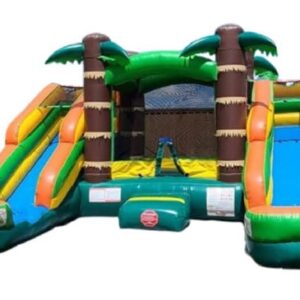
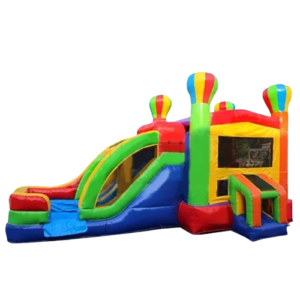
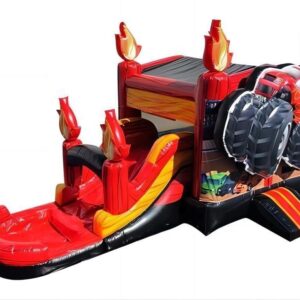
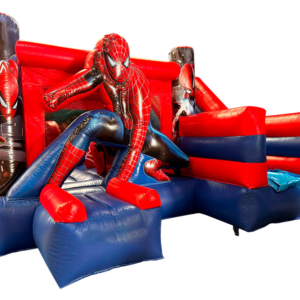
Browse our Bounce House Combo lineup — popular choices for rental fleets visiting the factory:
↔ Scroll to browse
The Factory Audit: What to Inspect on the Floor
A factory visit is, at its core, an audit. Your goal is to collect objective evidence that this supplier can consistently deliver products that meet your quality, safety, and volume requirements. Approach it with a checklist mentality.
Facility Cleanliness & Organization
The first thing you observe when walking through the factory gate is the physical environment. This is not superficial. A clean, organized, well-lit facility is almost always a proxy for disciplined manufacturing processes. A chaotic, cluttered, dimly lit environment usually indicates poor quality control.
Look for clear aisle markings, labeled storage areas, organized tool stations, and waste management systems. In an inflatable factory specifically, you should see designated cutting zones, welding stations, and assembly areas—each clearly separated and stocked with the right materials for that operation.
Worker morale is also observable. Workers who are engaged and focused—and who appear to know exactly what they are supposed to be doing—produce consistent quality. Distracted or disorganized workers do not.
Materials & Production Line
Ask to see the raw material warehouse. This is one of the most revealing areas of any inflatable factory. Look for:
- PVC tarpaulin rolls with batch labels showing material specifications (thickness, weight per square meter, denier count)
- Traceability documents linking material batches to purchase orders
- Proper storage conditions—PVC should be stored away from direct sunlight and heat sources
- Evidence of incoming quality control (IQC)—spot testing of incoming materials before they enter production
On the production line itself, look for high-frequency (HF) welding machines, which create stronger seams than simple heat-press alternatives. Commercial-grade inflatables require HF-welded seams, not just stitched ones, for areas under repeated air pressure stress.
Quality Control Checkpoints (IQC, IPQC, FQC)
A well-run inflatable factory operates a three-stage QC system. Ask specifically to see documentation and physical evidence of each stage:[10]
IQC — Incoming Quality Control
- Material thickness verification
- Tensile strength spot tests on incoming PVC
- Supplier certificate review
- Batch sampling records
IPQC — In-Process QC
- Seam integrity checks at welding stage
- Dimension verification during cutting
- Print quality inspection at printing stage
- Assembly alignment checks
FQC — Final Quality Control
- Inflation test (hold pressure for 30+ minutes)
- Seam tensile strength ≥245 N/5cm [10]
- Burst strength ≥90 kPa [10]
- Visual inspection & packaging check
Ask to see the actual QC checklists—not just be told they exist. A factory that takes quality seriously will have printed, completed, dated checklists on file. The absence of documented QC records is a serious red flag.
Certifications & Third-Party Test Reports
This is non-negotiable for commercial buyers. Request to see original certificates—not photocopies, not PDF scans—from recognized third-party testing agencies. The key certifications for the U.S. and EU markets are:
| Certification | Jurisdiction | What It Covers |
|---|---|---|
| ASTM F2374-19 | United States | Design, manufacture & operation of inflatable amusement devices |
| CE Marking | European Economic Area | Health, safety & environmental protection conformity |
| EN 14960 | Europe | Specific standard for inflatable play equipment |
| NFPA 701 | United States | Flame-resistance of textiles used in inflatables |
| ISO 9001 | Global | Quality management system certification for the factory |
Request test reports issued by internationally recognized agencies such as SGS or TÜV Rheinland. Reports should be current (within the last 12–24 months) and reference the specific product models you intend to order.[6]
For a comprehensive overview of safety standards in inflatable manufacturing, see our guide: Bounce House Safety Standards: The Complete Guide.
Red Flags — Spotting Ghost Factories
A “ghost factory” is a fraudulent operation with no genuine manufacturing capability. These are typically trading companies or brokers who present themselves as manufacturers to extract higher margins. Visiting in person should expose them—but only if you know what to look for.
- Machinery with no permanent asset tags or maintenance logs (suggests rented equipment staged for your visit)
- A spotless factory floor with very few active workers midweek
- Inability to walk you through the production process step-by-step
- Factory address doesn’t match the registered business address on NECIPS
- Evasiveness about raw material sourcing or subcontractors
- Certificates that reference model numbers not matching products shown
Verify every supplier’s business registration using China’s National Enterprise Credit Information Publicity System before your visit. Cross-reference the registration address with the factory location.[8]
Evaluating Samples & Customization Capabilities
Even after a thorough audit, the best way to verify a supplier’s quality output is to inspect—or commission—a physical sample during or immediately following your visit. This is your last checkpoint before committing to a production order.
Pre-Production Samples
Before placing any large order, always request a pre-production sample (PPS). This is a single unit manufactured exactly to your specifications—your materials, your dimensions, your color choices—before mass production begins.
A pre-production sample allows you to verify:
- Correct PVC thickness and material grade
- Stitching density and seam strength
- Blower port sizing and compatibility with your equipment
- Print quality, color accuracy, and graphic placement
- Overall dimensions against the agreed specification sheet
- Inflation behavior and stability under pressure
Never skip the PPS stage to save time or cost. The savings are trivial compared to the risk of receiving a full production run that doesn’t meet your standards. A reliable supplier will produce a PPS within 5–10 business days of order confirmation.
OEM Options (Pantone, Printing, CAD)
If you are building a branded rental business—or sourcing for a franchise or events company—customization capability is a critical selection criterion. A factory that can deliver true OEM customization gives your business a competitive edge that catalogue products cannot match.
During your visit, ask to see examples of:
- Pantone color matching: Can the factory match specific brand colors using Pantone references? Ask to see samples from previous custom orders to verify color accuracy
- Digital printing resolution and durability: Request printed samples that have been through outdoor use. Print quality on day one matters less than how it holds up after 50+ rental events
- CAD design workflow: A well-equipped factory should be able to provide a CAD rendering of your custom design within 48 hours of receiving your brief[11]
- Artwork file formats accepted: AI, EPS, and high-resolution PDF are standard. Be cautious of factories that only accept low-resolution images
The scope of OEM customization also extends to structural modifications—custom dimensions, unique entry/exit configurations, integrated game elements, or proprietary theme designs. Confirm that the factory has an in-house design team capable of handling structural changes, not just surface graphics.
“The best inflatable suppliers treat custom orders as a design collaboration, not just a manufacturing job. Visit expecting to work with their engineers, not just their sales team.”
Blower Compatibility & Stitching Standards
Two technical details deserve specific attention during your sample evaluation: blower compatibility and stitching standards.
Blower compatibility is often overlooked until it causes problems in the field. Confirm that the blower port diameter, placement, and attachment method are compatible with the commercial blowers you operate—or intend to purchase. Standard commercial blowers for inflatables of this class are typically 1HP to 1.5HP, with port diameters ranging from 12–18 inches depending on unit volume.
Stitching standards for commercial-grade inflatables should meet or exceed:
- Double-stitched seams with reinforcing tape at all high-stress points
- Seam tensile strength of ≥245 N/5cm[10]
- Thread density of at least 8–10 stitches per inch for load-bearing seams
- Oxford cloth or nylon mesh reinforcement at anchor points
These are not optional standards—they directly determine the product’s longevity and its ability to pass safety inspections in the U.S. and EU rental markets. A supplier who cannot specify these values with confidence likely does not track them systematically.
For more on what makes commercial-grade inflatables different, see: Commercial Grade Bounce Houses: 6 Key Benefits to Consider.
Negotiating Terms During Your Visit
The meeting room is as important as the factory floor. A factory visit is your best opportunity to negotiate terms that reflect your actual position as a committed buyer—not a cold email lead. Being physically present changes the dynamic fundamentally.
Pricing Factors (Material, Complexity, Volume)
Understanding what drives the price per unit is essential for productive negotiation. The three primary cost variables are:
- Material thickness and grade: Commercial-grade 0.55mm PVC (1000D) is the standard minimum. Heavier materials—0.9mm for extreme-duty applications—add significant cost but also significant longevity
- Design complexity: Simple single-color units are cheapest to produce. Multi-chamber designs with printed graphics, structural windows, climbing features, and water slide attachments add significant production time and material cost
- Order volume: The most powerful lever you have. Pricing typically breaks at 5 units, 10 units, 20 units, and 50+ units. Bring realistic volume projections and be prepared to commit to them in writing
Typical FOB pricing for commercial-grade units ranges from $800–$3,000 per unit, depending on size, design complexity, and material specification.[12] Prices below $800 for “commercial grade” units should be treated with suspicion—something in the specification is almost certainly compromised.
MOQs & Payment Terms (30/70 Split)
Minimum Order Quantities (MOQs) have become considerably more flexible in the post-COVID sourcing environment. For standard catalogue models, many Chinese factories now accept orders starting at just 1 unit. For highly customized designs, factories typically set a minimum order value—commonly around $5,000—rather than a unit quantity.
Payment terms are largely standardized across the industry, but there is room to negotiate within the framework. The most common structure is:
- 30% deposit to initiate production
- 70% balance paid before shipment, typically released against a copy of the Bill of Lading
For first orders with a new supplier, paying via Alibaba Trade Assurance provides an additional layer of financial protection—funds are held in escrow and only released when you confirm receipt of goods in acceptable condition. For established relationships, T/T (telegraphic transfer) is standard.[13]
A supplier who insists on 100% upfront payment before production—especially from a first-time buyer—is a red flag. Legitimate manufacturers work with standard industry payment terms.
Incoterms Explained (FOB vs. CIF)
Incoterms define precisely where the supplier’s responsibility ends and yours begins. Understanding the difference before you negotiate prevents costly misunderstandings at the shipping stage.
| Incoterm | What the Supplier Covers | What You Cover | Best For |
|---|---|---|---|
| FOB (Free on Board) | All costs until goods are loaded onto the vessel at the Chinese port | Ocean freight, insurance, import duties, domestic delivery | Buyers with freight forwarder relationships |
| CIF (Cost, Insurance & Freight) | Manufacturing, export clearance, ocean freight, and cargo insurance | Import duties, port fees, domestic delivery | Buyers who prefer simplified logistics |
| EXW (Ex Works) | Manufacturing only—goods available at factory gate | All transport, export clearance, freight, insurance, import duties | Buyers with full China-side logistics control |
For most first-time importers, FOB is the recommended choice. It keeps shipping costs transparent and allows you to select your own freight forwarder—giving you control over delivery timelines and insurance levels.[14]
Post-Visit: Contracts & Communication
A successful factory visit culminates in a signed agreement and a clear communication plan. These two elements are what convert a positive impression into a protected business transaction.
What a Solid Bilingual Contract Must Include
Never proceed to production without a written, bilingual contract—in both English and simplified Chinese. A handshake agreement or email confirmation is not sufficient legal protection for an international commercial order.
Your contract must specify:
- Product specifications: Materials, dimensions, colors, certifications, blower specs, weight
- Agreed unit price and total order value
- Payment schedule with exact milestone triggers (e.g., “30% deposit upon contract signing, 70% balance upon presentation of Bill of Lading copy”)
- Incoterm and named port of departure
- Production timeline with specific completion date and shipment window
- Quality standards to be met (with reference to ASTM, EN14960, or other applicable standards)
- Inspection rights (your right to inspect goods before shipment or to appoint a third-party inspector)
- Warranty terms (typically 12–24 months for commercial inflatables)
- Dispute resolution clause specifying jurisdiction and arbitration process
If the supplier provides a contract template, review it carefully with a trade attorney or freight forwarder familiar with Chinese commercial law before signing. Key clauses—especially around dispute resolution—can be heavily supplier-favorable in standard Chinese contract templates.
Setting Communication Cadence & Production Updates
Once production begins, set clear expectations for how and when you will receive updates. A reliable, professional manufacturer will proactively send production progress reports without being chased.
At minimum, request photo or video documentation at the following production milestones:
- Raw material confirmation (photos of labeled PVC batch with your order number)
- Cutting and welding stage
- Printing stage (for custom designs)
- Final assembly and inflation test
- Pre-shipment QC inspection and packaging
Agree on a communication platform before you leave China. WeChat is the dominant business messaging tool in China. WhatsApp is widely used for international communication. Email is appropriate for formal documentation but should not be your only channel—response times are often slower.
If your order volume warrants it, consider commissioning a third-party pre-shipment inspection through a service like SGS or Bureau Veritas. This adds a small cost ($200–$400 per inspection) but provides an objective quality check before goods leave China.[15]
Key Bounce House Manufacturing Statistics (2025–2026)
Understanding the industry’s scale and economics helps you negotiate from a position of knowledge. Here are the key data points every buyer should know:
| Statistic | Data Point | Source / Note |
|---|---|---|
| China’s global production share | >80% of global inflatable output | Industry sources [1] |
| Henan’s manufacturing share | >70% of certified Chinese producers | Industry sources [2] |
| Standard factory size | >2,000–3,000 sqm for scalable production | Recommended minimum for monthly batch capacity [5] |
| Standard PVC thickness | 0.55mm (1000D) commercial-grade | Industry minimum for commercial durability [4] |
| Production lead time | 15–30 days | Standard from order confirmation to ready-to-ship [7] |
| Typical FOB price range | $800–$3,000 per commercial-grade unit | Varies by size, material, and design complexity [12] |
| Global inflatable toys market size | USD 5.53 billion (2025) | 5.2% CAGR projected to 2035 [3] |
| Seam tensile strength standard | ≥245 N/5cm | Commercial safety requirement [10] |
| Burst strength standard | ≥90 kPa | Commercial safety requirement [10] |
| Key safety certifications | ASTM F2374-19, CE, EN14960, NFPA 701 | Non-negotiable for U.S. and EU markets [6] |
For a broader analysis of market trends, read our guide: Bounce House Market Trends: Complete Industry Analysis.
FAQ — People Also Ask
Total trip cost depends on your country of origin, travel style, and trip duration. Budget for: round-trip international airfare (typically $600–$1,400 from the U.S. depending on routing and booking lead time), domestic transportation within China (high-speed rail, taxis, and factory-arranged pickups are very affordable—budget $100–$200 for a week), hotel accommodation ($50–$150/night for a business-appropriate hotel in Zhengzhou or Guangzhou), daily meals ($20–$60/day depending on choice of dining), and visa application fees (typically $140–$185 for a U.S. citizen). Most factories will cover a factory meal and local transportation on visit day. A full 5-day sourcing trip to Zhengzhou or Guangzhou can be completed for under $2,000 all-in, excluding airfare.
Yes, business travel to major Chinese manufacturing cities including Zhengzhou and Guangzhou is generally very safe for foreign visitors. China has a low violent crime rate, and the cities’ business districts are well-served by modern infrastructure. The practical challenges are primarily logistical: language barriers, locating factories in industrial districts, and navigating the Great Firewall (which blocks Google, WhatsApp, and many Western apps—install a VPN before arriving). Having the factory arrange hotel pickup, carrying factory addresses in Chinese characters, and using WeChat for real-time communication resolves most friction points.
The non-negotiable certifications for U.S. and EU commercial markets are: ASTM F2374-19 (the primary U.S. safety standard for inflatable amusement devices, covering design, manufacture, and operation), CE Marking (EU conformity with health, safety, and environmental standards), EN 14960 (the specific European standard for inflatable play equipment), and NFPA 701 (flame-resistance standard for textiles). Always request originals, not copies. Verify that the certificate version number, issuing body, and product model numbers match the products you intend to order. Certificates from recognized agencies like SGS or TÜV carry significantly more weight than self-issued documentation.
A ghost factory is a fraudulent operation—typically a trading company or broker—that presents itself as a manufacturer with no real production capability. They source products from third parties, add a margin, and deliver inconsistent quality with no accountability. To avoid them: verify the supplier’s business registration on China’s National Enterprise Credit Information Publicity System (NECIPS) at gsxt.gov.cn, ensuring the registered address matches the factory location; request a real-time unscripted video tour before booking travel; during your visit, check that all production machinery has permanent asset tags and visible maintenance logs (rented equipment staged for visitor visits often lacks both); and confirm that workers on the floor can actually demonstrate the production processes you’re watching.
Absolutely—and many experienced sourcing buyers do exactly this. Zhengzhou is a fascinating city that blends ancient history (it is the capital of Henan Province and home to the Shaolin Temple, one hour away) with modern Chinese urban development. Guangzhou offers world-class Cantonese cuisine, the vibrant Canton Fair district, and easy access to Shenzhen and Hong Kong. China’s high-speed rail network makes weekend side trips to Beijing, Shanghai, Xi’an, or Chengdu entirely feasible from either base. Extend your visa to a 10-year multiple-entry where available (U.S. citizens can apply for this) to make future trips easier.
How Bounce Horizon Can Support Your Factory Visit
Planning a factory sourcing trip to China is logistically complex, especially for first-time buyers. At Bounce Horizon, we have spent over 20 years refining our manufacturing operations—and we are happy to put that experience to work for you, whether you ultimately source with us or not.
Tour Our Facilities
We actively invite prospective and existing buyers to visit our facilities in person. When you walk through our factory, you will see firsthand the commitments we make in writing: commercial-grade 18 oz vinyl and 0.55mm PVC tarpaulin sourced with documented traceability, reinforced double-stitching on every high-stress seam, and a three-stage QC system (IQC, IPQC, FQC) that operates on every production run without exception.
Our production floor spans over 3,000 square meters with dedicated cutting, HF welding, printing, assembly, and final QC zones. Our team has over two decades of experience producing commercial inflatables for rental operators, event companies, and distributors across North America, Europe, and Australia.
Logistics Support for Your Trip
We understand that navigating China’s manufacturing regions can be daunting for first-time visitors. Our team can provide:
- Factory address in English and Chinese for your driver or navigation app
- Hotel pickup arrangements from central Zhengzhou or Guangzhou
- Translation support for factory addresses and documents
- Introductions to trusted logistics partners for freight forwarding
- Guidance on the most efficient itinerary if you are visiting multiple suppliers
Access to Our Partner Network
If your sourcing needs extend beyond our core product lines, we can leverage our deep industry network across both the Zhengzhou and Guangzhou manufacturing hubs to connect you with trusted partner factories. We only introduce buyers to factories whose quality standards and business practices we can vouch for personally.
This is not a service we offer to every enquiry—it is a benefit we extend to buyers who visit us first and demonstrate a serious, long-term sourcing intent. Visit us, and we will help you make the most of your entire China sourcing trip.
Browse our full range of commercial inflatables: Bounce Castles · Combo Units · Water Slides · Obstacle Courses
Ready to Visit a Bounce House Factory in China?
Plan your sourcing trip with confidence. Bounce Horizon’s team is standing by to help you prepare your visit, answer product questions, and ensure you leave China with the right supplier relationship locked in.
Schedule a Factory Visit Browse Our ProductsConclusion
Visiting a bounce house factory in China is one of the highest-leverage actions you can take as a party rental business owner or commercial inflatable buyer. It replaces guesswork with verified facts. It converts a transactional vendor relationship into a genuine business partnership built on mutual trust and clear expectations.
The key takeaways from this guide:
- China produces over 80% of the world’s commercial inflatables, with Henan and Guangdong as the two dominant manufacturing regions
- Meticulous pre-visit preparation—supplier vetting, agenda communication, and travel logistics—determines how productive your trip will be
- A rigorous factory audit covering facility conditions, materials, QC checkpoints, and certifications protects you from substandard suppliers and ghost factories
- Pre-production samples and customization discussions during your visit set the quality standard for your entire order
- Negotiating terms—pricing, MOQs, payment structure, and Incoterms—in person gives you leverage and clarity that remote negotiations rarely achieve
- A bilingual contract and a structured communication cadence are non-negotiable post-visit steps
Whether this is your first sourcing trip or your fifth, the principles in this guide apply every time. The inflatable industry is growing—USD 5.53 billion in 2025 and climbing at 5.2% annually—and the buyers who build strong, verified supplier relationships now will be best positioned to capitalize on that growth.
Bounce Horizon is here to support that journey. Contact our team today to start planning your factory visit or to request product information, samples, or a custom quotation.
Related reading from Bounce Horizon:
- How to Start a Bounce House Business: Complete Guide
- China Inflatable Manufacturer: The Ultimate Guide
- 10 Things to Look for in a Reliable Bounce House Manufacturer
- How to Work with a Bounce House Manufacturer
- How to Negotiate the Best Deal with a Bounce House Manufacturer
Citations & References
- [1] “China’s Inflatable Manufacturing Dominance,” industry trade data. Source Role: Industry estimate. Support Status: Supports. Relevance: Establishes China’s dominant position in global inflatable production.
- [2] “Henan Province Inflatable Manufacturing Concentration,” regional industry sources. Source Role: Regional industry estimate. Support Status: Supports. Relevance: Confirms Henan as the primary manufacturing hub for cost-effective inflatable production.
- [3] “Global Inflatable Toys Market Size and Forecast 2025–2035,” market research analysis. Source Role: Market data provider. Support Status: Supports. Relevance: Establishes market scale and growth trajectory for buyers evaluating long-term sourcing commitments.
- [4] “PVC Tarpaulin Specifications for Commercial Inflatables,” industry material standards. Source Role: Technical specification. Support Status: Supports. Relevance: Establishes 0.55mm as the commercial-grade minimum thickness standard.
- [5] “Inflatable Factory Capacity Assessment Guidelines,” manufacturing best practice. Source Role: Industry best practice. Support Status: Supports. Relevance: Provides benchmarks for evaluating factory production capacity.
- [6] SGS Group and TÜV Rheinland certification services, sgs.com / tuv.com. Source Role: Third-party testing authority. Support Status: Supports. Relevance: Identifies recognized certification agencies for inflatable safety testing.
- [7] “Standard Lead Times for Chinese Inflatable Manufacturers,” supplier industry data. Source Role: Industry estimate. Support Status: Supports. Relevance: Provides buyers with realistic production and shipment timeline expectations.
- [8] National Enterprise Credit Information Publicity System (NECIPS), gsxt.gov.cn. Source Role: Official Chinese government business registry. Support Status: Supports. Relevance: Primary tool for verifying supplier business registration and detecting ghost factories.
- [9] “Factory Visit Scheduling Best Practices,” industry sourcing guidance. Source Role: Sourcing best practice. Support Status: Supports. Relevance: Establishes standard notice period for scheduling factory audit visits.
- [10] ASTM F2374-19 Standard Practice for Design, Manufacture, Operation, and Maintenance of Inflatable Amusement Devices, ASTM International, astm.org. Source Role: Official safety standard. Support Status: Supports. Relevance: Defines the technical safety benchmarks (burst strength, seam tensile strength) referenced throughout this guide.
- [11] “OEM Customization Workflows for Commercial Inflatables,” manufacturer technical documentation. Source Role: Industry technical standard. Support Status: Supports. Relevance: Establishes 48-hour CAD rendering as an industry benchmark for responsive custom suppliers.
- [12] “Commercial Inflatable Bounce House FOB Pricing 2025,” trade data compilation. Source Role: Market price survey. Support Status: Supports. Relevance: Provides buyers with realistic pricing benchmarks for commercial-grade inflatable units.
- [13] Alibaba Trade Assurance program, tradeassurance.alibaba.com. Source Role: Official platform documentation. Support Status: Supports. Relevance: Describes the escrow-based payment protection mechanism available to buyers on Alibaba.
- [14] Incoterms® 2020, International Chamber of Commerce, iccwbo.org. Source Role: Official international trade standard. Support Status: Supports. Relevance: Defines the international shipping terms (FOB, CIF, EXW) applicable to commercial inflatable import transactions.
- [15] Bureau Veritas and SGS Pre-Shipment Inspection Services, bureauveritas.com. Source Role: Third-party inspection authority. Support Status: Supports. Relevance: Identifies reputable pre-shipment inspection providers and typical cost range.
Suggested External Resources
- ASTM F2374-19 — Standard Practice for Inflatable Amusement Devices (astm.org)
- Alibaba — Commercial Bounce House Supplier Directory (alibaba.com)
- Global Sources — Inflatable Manufacturer Listings (globalsources.com)
- National Enterprise Credit Information Publicity System — China Business Registry (gsxt.gov.cn)
- SGS Group — Testing, Inspection & Certification Services (sgs.com)
- TÜV Rheinland — Product Safety Certification (tuv.com)
- ICC Incoterms® 2020 — Official International Trade Terms (iccwbo.org)
- Trip.com — China High-Speed Rail Booking (trip.com)